The gym at Glade Court is one of the best things about living here, and it takes very little to keep it that way. Most of what follows is common sense — the sort that's easy to forget when you're halfway through a set and the room is filling up. Skim it before your next session.
Before You Arrive
A little planning prevents most of the friction. Check the noticeboard or residents' app for planned maintenance or deep cleans, so you're not turning up to a locked door, and use the booking system rather than hoping. If there isn't one, think about when the gym is likely to be busy — early mornings and the hour after most people finish work are the usual pinch points — and move your session if you can.
Pack what you'll actually need:
- A towel, for yourself and for any bench or mat you use.
- A water bottle, filled before you come down.
- Clean indoor shoes, so the floor isn't carrying grit in from outside.
- Headphones, if you train to music or a podcast.
If you're bringing a guest, check the current policy and sign them in if that's required. Guests are welcome when the rules are followed; unannounced visitors cause problems for everyone.
Booking Slots and Peak Times
Booking exists so that nobody arrives to find a queue. Book the slot you'll genuinely use, and cancel as soon as your plans change rather than ten minutes after it has started. Arriving late and running over into the next slot is the quickest way to irritate the neighbour who booked after you.
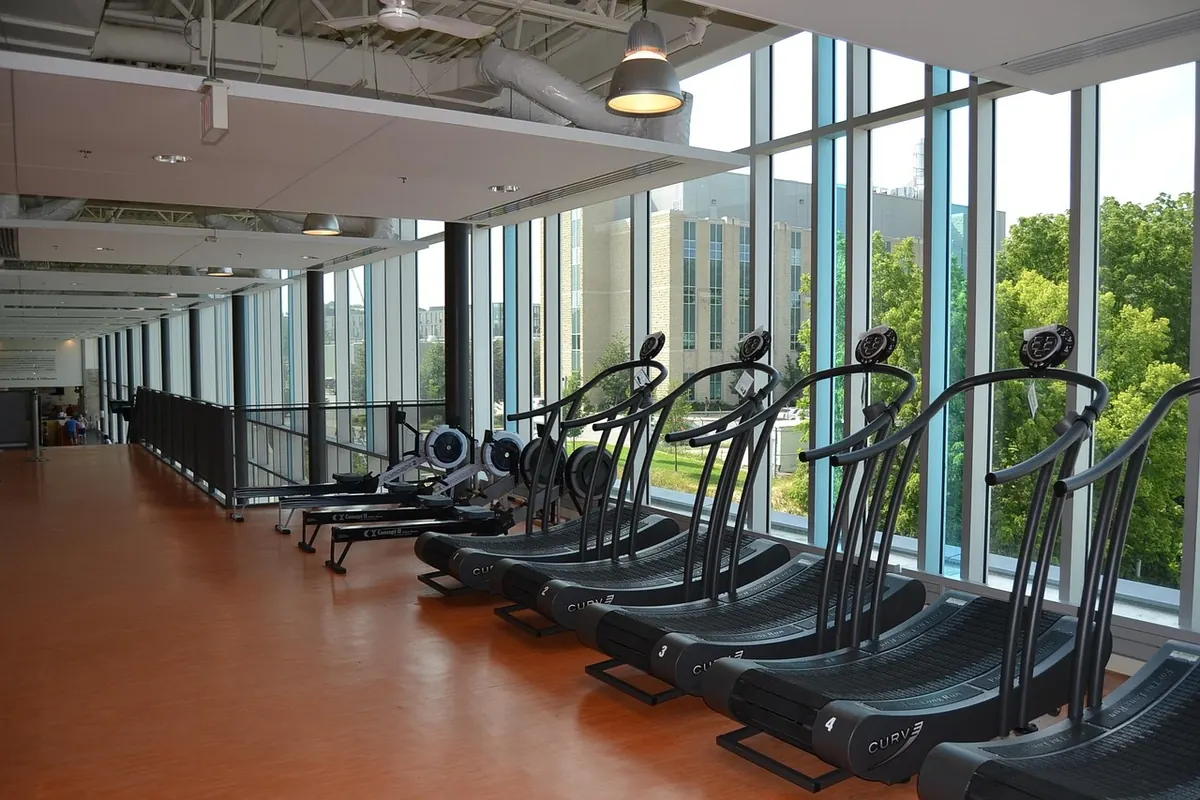
When it's busy, a few habits go a long way. If you're on a treadmill, bike or cross-trainer and someone is hovering, tell them how long you've got left — "about twelve minutes" is all it takes. If you're working between sets on a bench, offer to share; in a small gym, working in is normal and usually quicker for both of you. Don't hold a machine with a towel and a bottle while you do something else, and don't stretch your rest periods to protect a spot you're not using. If there's no booking system, the same courtesy applies — you'll just need to be more flexible about the order you do things in.
Cleaning Up After Yourself
Wipe down what you've touched: handles, pads, seats, bars, the back of the bench. Wipes and spray are there for that purpose, and one wipe per machine is the sensible baseline — not one for the whole session. If you'd rather clean a machine before you use it as well, nobody will object.
Spray the cloth, not the console. Screens, buttons and seams don't enjoy being drenched. The same goes for mats: use the mat spray rather than the general machine wipe, clean both sides, and hang it up to dry instead of leaving it rolled in a corner.
The sixty-second reset
Before you move to the next station, or head off for the day:
- Strip any bar you've loaded and put the plates back on the tree.
- Return dumbbells to their numbered slot — not the nearest rack, the right one.
- Put benches, steps, bands, rollers and boxes back where they belong.
- Wipe the machine you've just finished on.
- Collect your bottle, towel, phone and anything else you brought down.
Spills get reported, not ignored. A puddle by the water cooler or a patch of sweat on a bench is a slip hazard for the next person, and it takes less time to mention it at reception than to worry about it later. Don't drape wet towels over equipment — the hooks in the changing area exist for that.
Noise, Music and Conversation
Headphones on, at a volume where nobody else can hear the bass. In a building like this, low frequencies travel through floors and walls far better than you'd expect, and what sounds reasonable to you at seven in the morning sounds quite different to the flat above.
A few specifics:
- Take calls outside the gym. Speakerphone and video calls, in particular, don't belong in a shared training space.
- Ask before filming. If you're recording a set to check your form, keep other residents out of the frame, and stop if someone asks.
- Lower weights under control. Dropping dumbbells, slamming stacks and letting plates crash into the rack is noise that carries, especially early and late in the day.
- Keep long conversations off the machines. If you've had three minutes of chat on the leg press, finish the set or step to one side.
- Ask before changing a shared speaker, the radio or the television channel.
Effort is noisy, and nobody minds a bit of that. It's the incidental noise — a phone on loudspeaker, a dropped dumbbell, a conversation shouted across the room — that wears neighbours down.
Sharing the Space with Neighbours
Mirrors are for checking form, not for scrolling. The free-weight area is usually the tightest part of any gym, so leave a gap between you and the next person, and wait for someone to finish a set rather than walking between them and the mirror. Kit lives in your bag or on the rack — not spread across the floor, and not on a bench you aren't using.
Be considerate about the room itself: ask before opening windows, adjusting blinds or changing the thermostat, because the person on the rower may have a different idea of comfortable. Not everyone wants to chat mid-session, and a nod is a perfectly good greeting. If someone new looks lost, point them towards what they need; it costs ten seconds and it's the sort of thing that comes back round in a small community. Lockers are for the duration of your session, not storage — take everything with you when you leave.
When Something Isn't Right
Most issues don't need escalating. If someone leaves a machine soaked or a bar loaded, a polite word at the time usually settles it, and nine times out of ten they simply hadn't noticed. If the same problem repeats, mention it to the concierge or building manager with the time, the location and a description of what happened — a note about the behaviour, not a complaint about a person.
Damage gets reported the same day. A frayed cable, a wobbly bench or a treadmill that cuts out mid-run is a safety matter rather than an inconvenience, and it won't be fixed unless somebody says something. If you're hurt while using the gym, get proper medical attention first and tell the management afterwards. And if you're new to exercise, returning from injury or managing a health condition, speak to your GP or a qualified instructor before you start. That's general advice, not a substitute for advice about your own situation.
The Two-Minute Check Before You Leave
Do a slow lap of the room before you head out. It takes less time than a set of press-ups, and it's the difference between a gym that feels looked after and one that doesn't.
- Every weight racked, every bar stripped, every bench back in place.
- Machines and mats wiped, mats hung up to dry.
- Nothing left behind — including on the hooks and in the changing area.
- Windows closed, fans off, lights off if you're the last one out.
- The door pulled shut and locked behind you.
- Wipes, spray or sanitiser running low? Tell the concierge rather than leaving an empty container for the next person.
- Next slot booked, if you want one.
That's the whole checklist. None of it is complicated and none of it takes long, which is exactly why it works when everyone does their bit.
Photo: Sendoku / Pixabay